I won't talk about the personal life of Whitlam. I never met the man, and I'm not going to juggle accounts in some attempt to assure myself that he was a nice guy. Realistically, in the larger scale of things, it doesn't matter what he was like. What's important is what he did.
Australia in 1972 was ridiculously conservative. I don't like how conservative the nation is now, but it was a mess in 72. There are two parties in Australian politics essentially, then and now: The Liberals, who represent the right, and Labor (yes, spelt the American way. It's a long story), who represent the left.
Labor had been out of power for a long time in 1972. They, under Curtin, had guided Australia through WWII and after his death his successor, Chifley, had led Australia through the immediate post war period, which included the largest immigration scheme in Australian history. Chifley had been replaced by the conservative Robert Menzies in 1949. That was the end of Labor for over two decades.
So what happened to the Left? Where did Labor go? That's also a long story. I'll try to make it quick, so we can get to Whitlam. It doesn't matter where you're from, I'm sure you know from your national history, that the 1950s and 60s had a bit of a Red Scare, a fear that Communism was going to take over the world. Australia was far from immune. In fact, I'd say we took a pretty big does of it.
The Right, of course, was stronger under the Red Scare, being able to point to Labor and claim that it was Communist supporting. They were wrong, but it's not hard to see where they were coming from. Just have a look at some of the writings of Curtin here. True, they were from the very early part of the 20th Century, and he certainly became more moderate as time went on, but the Labor party still had a beautiful and rich history of Socialism. I will talk about this some more one day.
 |
| Curtin, Age 34 (From the files of the Curtin family, 1919) |
Menzies used this to boost his own power. In 1951 he attempted to execute a referendum to make the Communist Party (which was already laughably tiny) illegal. In a fascinating turn of events, it failed. The vast majority of Australian referendums fail, due to the fact that you need a majority of states to agree, as well as a majority of voters nationally. Considering places like Tasmania and Western Australia tend to be wildcards, good luck getting that through.
Although this could be seen as a vote of support for Communism, it was more realistically a fear of some sort of fascism. The whole "slippery slope" problem of making an ideology illegal. It was 1951, after all, the Nazis and Mussolini had only fallen 7 years ago. Australia also dealt with it's own fascists, "The New Guard", during the Great Depression, and people would have remembered.
Menzies was also able to capitalise off an event called the "Petrov Affair". In essence, a Soviet Colonel at the Soviet Embassy in Canberra (yes, it is a stone's throw away from me, fascinatingly enough) defected to Australia, sowing stories of a huge Soviet spy-ring which had infiltrated Australia. This was 1954, just three years after the referendum, and Menzies anti-Communist stance payed off very well. The leader of the Labor party, H. V. Evatt, humiliated himself in his attempts to have the documents declared false, going as far as asking the Soviet ambassador if they were real. It pretty much ended his political career. Petrov was also great press. Consider images like the one below, portraying the "thuggish, heavy handed Soviets" which great propaganda was made of.
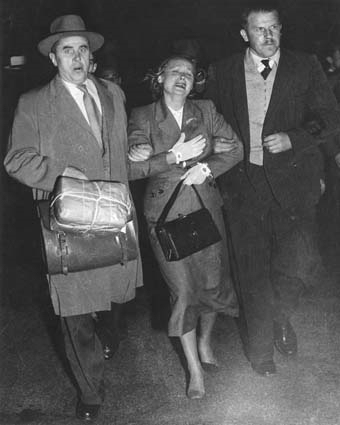 |
| Evdokia Petrova (Petrov's Wife) being led away, for a plane back to Russia. She managed to get help and stay in Australia. (1954). Taken from Wikimedia. |
Australia was colonised by the British, as I'm sure most people know. But that doesn't mean it was only the English who colonised the island. One of the largest groups to come to Australia in the pre-federation (1901) period were the Irish. Let's face it, the British have always wanted to send the Irish they didn't like to the other side of the world, and a prison colony let them do this. Add to this the Australian gold-rush occurring at the same time as the Irish potato famine, and you're probably starting to get an idea of how many Irish immigrants there were. As even my fictional name, Hudson Rourke, will attest, I have a lot to thank these immigrants for. Namely, my existence here.
The vast amounts of Irish immigrants and the British immigrants did not get along very well, and a rift emerged in society as a whole. As recently as the 70s or 80s, you can still see the Irish-English divide. The end of White Australia pretty much ended this kind of petty squabble. The main forum for this fight was the church. English Anglicans against Irish Roman Catholics.
The majority of the Labor leadership was Anglican, while in areas like Victoria the party was largely of Irish heritage, and thus Roman Catholic. Enter B.A Santamaria, who is the most notable influence on the creation of the party, and his Democratic Labor Party (still spelt the American way).
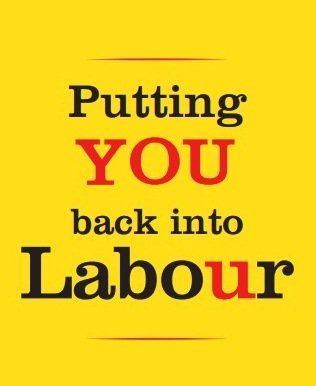 |
| The slogan would have worked better had they actually spelt Labor with a U in their party name. They eventually did change it, to be fair. |
That pretty much explains the 1950s. I'll try to be a bit more blunt in explaining the 1970s:
Let's start with probably the most important event to happen in Australian history in the latter half of the 20th Century.
If you didn't quite get the point, it's the Vietnam War. Australia wholeheartedly participated in the Vietnam War, and it has left a cultural impact more than almost any other event. For example, that song was originally performed by Redgum in the 80s, and this version was recorded in '06. Australia is still recovering in many ways.
I won't go into the history of the Vietnam War today, but all you really need to know is that it created an even wider gulf in the political landscape. Either you supported the righteous war against the Communists, or you opposed the senseless slaughter of Vietnamese civilians in the name of ideologies. As the 60s turned into the 70s, and the body count of Australians started to rise, less and less people supported the former.
Australia's relationship with America during this period certainly concerned many Australians. As Holt vowed that, in regards to the Vietnam war, we'd go "All the way with LBJ", images like the one below made Australians wonder how much we were letting America run our country.
 |
| President Johnson (left) and Prime Minister Holt (right) in a somewhat telling image of Australian-American relations. Photo details here. |
 |
| The Tent Embassy was an Indigenous Australian undertaking, arguing that the Australian government was so unreceptive to their needs that they were a foreign country, and required an embassy in the capital. More info here. |
Well, the board is set. The right is losing power. The force that was Robert Menzies has retired, his successor, Harold Holt, disappeared while swimming, and has still not been found to this day. McEwan & McMahon had short and forgettable runs. Vietnam, racism and a wish for change were coming. You could, in fact, say...


No comments:
Post a Comment